U.s. Submarine Classes - The Ohio-class nuclear-powered submarines comprise the U.S. Navy's 14 ballistic missile submarines (SSBNs) and four cruise missile submarines (SSGNs). At 18,750 tons each, the Ohio-class submarines are the largest submarines ever built by the U.S. Navy. They are the third largest submarines in the world, after the Russian Navy's Soviet-designed 48,000-ton Typhoon-class submarines.
The Ohio-class submarines carry 24 Tridt II missiles each, more missiles than the Borei-class (16 compared to Borei II's 20) or Typhoon-class (20).
U.s. Submarine Classes
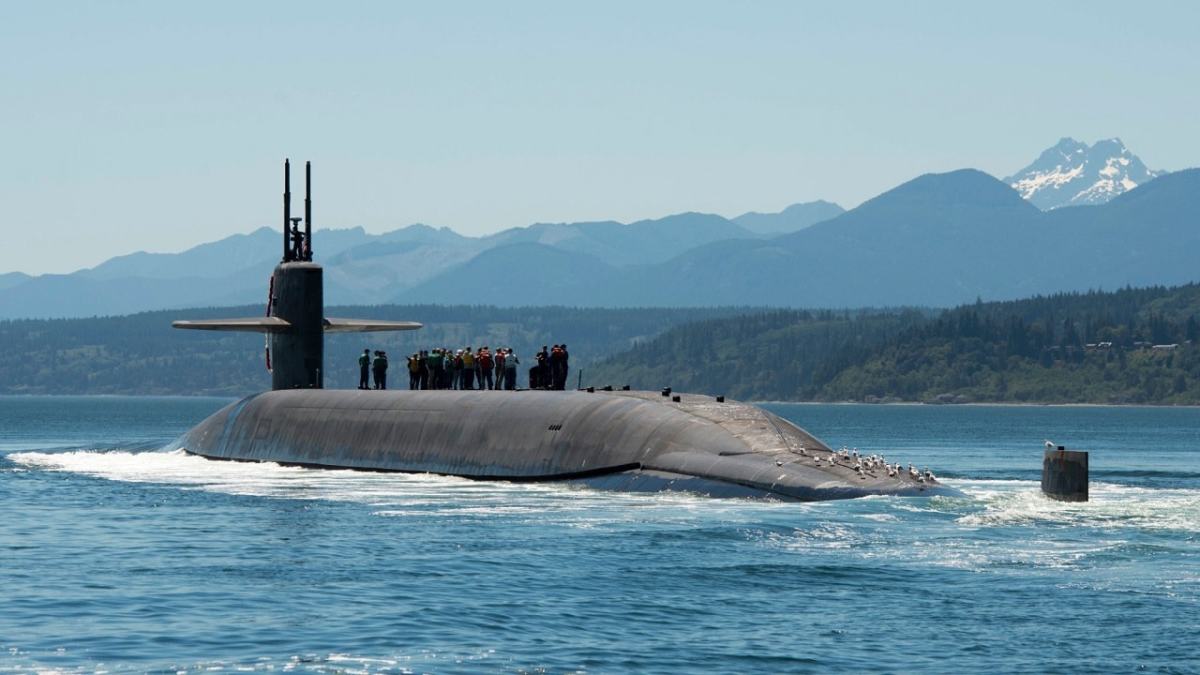
Along with USAF strategic bombers and ICBMs, the Ohio-class SSBN is part of the trinity of the US nuclear deterrent.
Russian Nuclear Missile Submarine Seen With Ukraine Invasion 'z'
Together, these 14 SSBNs carry nearly half of the strategic thermonuclear warheads in active service in the United States. Although Tridt missiles do not have preset targets for submarine patrols,
The lead submarine of this class was the USS Ohio. All Ohio-class submarines, with the exception of USS Henry M. Jackson, were named after U.S. states, a U.S. Navy tradition previously reserved for battleships and cruisers. Beginning in 2031, the Ohio class will be gradually replaced by the Columbia class.
Ohio-class submarines are designed for more strategic deterrent patrols. Each submarine is assigned a full crew of two, known as a blue crew and a gold crew, each of whom typically conducts deterrent patrols for 70 to 90 days. To reduce port time for crew turnover and resupply, three large logistics hatches were installed to provide large diameter resupply and maintenance access. These hatches allow quick transfer of supply pallets, equipment replacement modules and mechanical components for easy replacement and maintenance of the submarine. In addition, the submarine's "stealth" capability is greatly improved over all previous ballistic missile submarines. Ohio barely missed her sea trials in 1982, which allowed the U.S. Navy greater flexibility.
This class is designed to allow ships to operate for approximately 15 years between overhauls. At a cruising speed of 20 knots (37 km/h; 23 mph), the submarines are reported to be as quiet as the previous 6-knot (11 km/h; 6.9 mph) Lafayette-class submarines, but exact information Still exists. Classified.
First Submarine To Use New Stealth Technology
Ohio-class submarines consist of hull sections, each four-deck section 42 feet (13 meters) in diameter.
The sections are manufactured at Geral Dynamics Electric Boat's Quonset Point, Rhode Island, facility and assembled at its Groton, Connecticut, shipyard.
The U.S. Navy operates a total of 18 Ohio-class submarines, including 14 ballistic missile submarines (SSBNs) and four cruise missile submarines (SSGNs). SSBN submarines are the sea-based pillar of the US nuclear triad. Each SSBN submarine is armed with up to 24 Tridt II submarine-launched ballistic missiles (SLBMs). Each SSGN can carry 154 Tomahawk cruise missiles, plus one Harpoon missile launched from a torpedo tube.
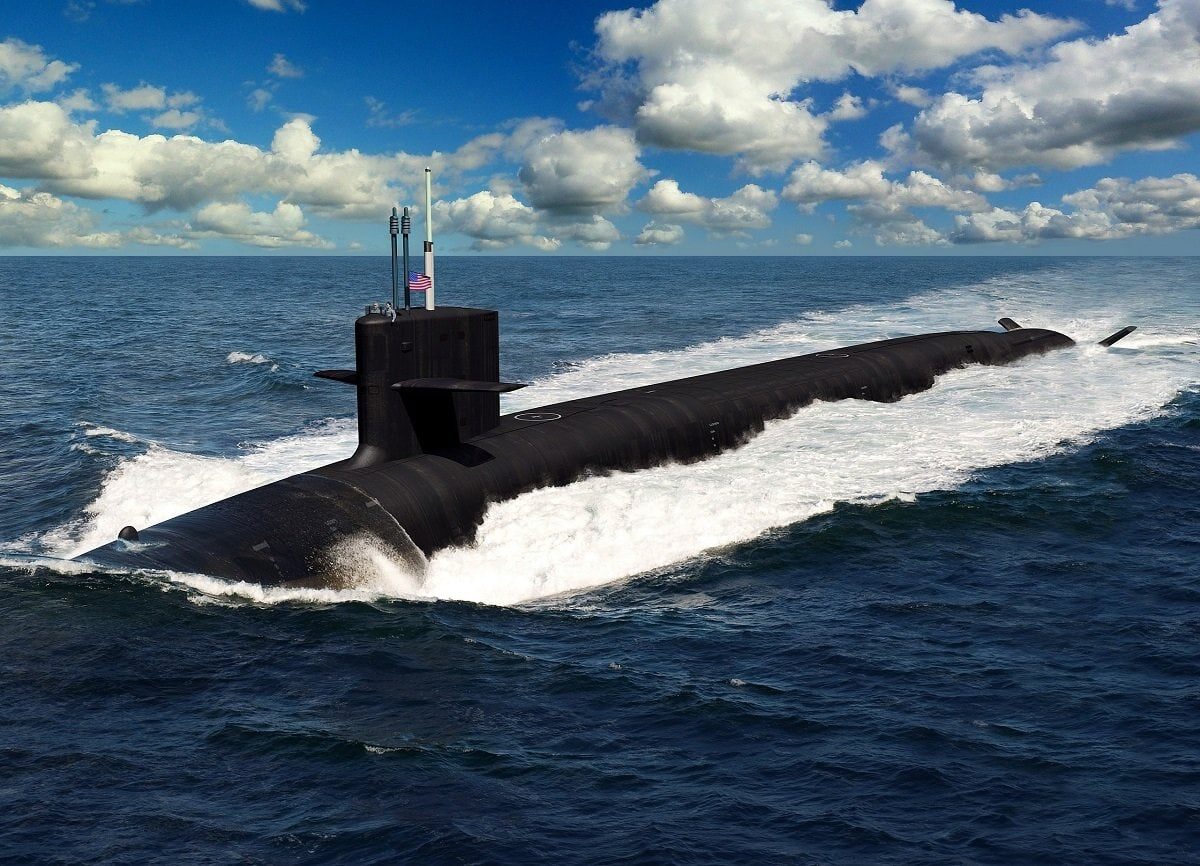
The Ohio class was designed in the 1970s to carry the Tridt SLBM, which was designed at the same time. The first eight Ohio-class submarines were initially armed with 24 Tridt I C4 submarine-launched ballistic missiles.
Ohio Class Subs Approaching Several Firsts As Navy Prepares Them To Reach 42 Years Of Service
Beginning with the 9th submarine in Tridt, Tennessee, the remaining subs are equipped with the larger three-stage Tridt II D5 missile.
The Tridt I missile carries 8 independently targetable retry vehicles, while the Tridt II missile carries 12, and is overall more destructive and more accurate than the Tridt I missile. Beginning in Alaska in 2000, the Navy began converting its remaining ballistic missile submarines equipped with C4 missiles to carry D5 missiles. The work was completed in mid-2008. The first eight submarines have their own docks in Bangor, Washington, to replace decommissioned Polaris A3 submarines. The remaining 10 submarines originally had a homeport in Kings Bay, Georgia, replacing the Atlantic Fleet's Poseidon and Triet Backfit submarines.
In 1994, the Nuclear Posture Review study determined that of the total 18 Ohio SSBNs the US Navy could operate, 14 were adequate for US strategic requirements. Conduct conventional ground attack and special operations. As a result, the four oldest ships in the class -- Ohio, Michigan, Florida and Georgia -- were phased out of the refit process in late 2002 and returned to active service in 2008.
Later ships can carry 154 Tomahawk cruise missiles and 66 special operators, among other capabilities and upgrades.
H I Sutton
During the conversion of the first four submarines to SSGN (see below), five of these submarines, Pnsylvania, Ktucky, Nebraska, Maine and Louisiana, were transferred from Kings Bay to Bangor. Further shifts will occur as the goals of U.S. strategic weapons change.
In 2011, Ohio-class submarines conducted 28 deterrent patrols. Each patrol lasts approximately 70 days. At any given time, four ships are stationed in the designated patrol area ("hard alert").
The modification modifies 22 of the 24 88-inch (2.2-meter) diameter Tridt missile tubes to have multiple vertical launch systems, and one configuration can be a bank of seven Tomahawk cruise missiles. In this configuration, the maximum number of cruise missiles carried is 154, which is equivalent to the number normally deployed by surface combat groups. Other possible payloads include new-generation supersonic and supersonic cruise missiles, and submarine-launched intermediate-range ballistic missiles,

Unmanned Aerial Vehicles, ADM-160 MALD, ssors for ASW or intelligence, surveillance and reconnaissance missions, Mine Countermeasure payloads such as the AN/BLQ-11 Long Term Mine Detection System, and pull common buoyancy launchers and stealth systems In capsule special payload tanks.
The Royal Navy's Astute Class Submarines: Part 1
The missile launch tubes also have room for storage canisters, which can increase forward deployment times for Special Forces. The other two Tridt tubes were converted into swimmer lock chambers. For special operations, advanced SEAL delivery systems and dry deck shelters can be installed in the lock room, and the ship can accommodate up to 66 special operations sailors or Marines, such as Navy SEALs or USMC MARSOC teams. Improved communications equipment installed during the upgrade enables the SSGN to serve as a forward-deployed, covert, small-scale combined command center.
On September 26, 2002, the Navy awarded Geral Dynamics Electric Boat a $442.9 million contract to begin the first phase of the SSGN submarine conversion program. These funds will only be used for the initial refit phase of the first two ships in the program. Advance acquisition funding was $355 million in FY 2002, $825 million in FY 2003 budget, through the five-year defense budget plan, $936 million in FY 2004, $505 million in FY 2005, and $170 million in FY 2006 Dollar. So the total cost of refitting the four ships is just under $700 million each.
In November 2002, Ohio entered dry dock to begin a 36-month refueling and missile conversion overhaul. Electric Boat announced on January 9, 2006 that the refit was complete. The refitted Ohio rejoined the fleet in February 2006, followed by Florida in April 2006. The refitted Michigan was commissioned in November 2006. The refitted Ohio made her maiden voyage in October 2007. Georgia returned to the fleet in Kings Sound in March 2008.
The four SSGNs are expected to remain in service until around 2023-2026. At that point, their capabilities will be replaced by Virginia Payload Modules installed on Virginia-class submarines.
Columbia Class Submarine
Four launch tubes on each SSBN were deactivated in 2017 as part of the New START treaty, reducing the number of missiles to 20 per ship.
Line drawing of the Ohio class in the original SSBN configuration. (1) Sonar Dome, (2) Main Ballast Tank, (3) Computer Room, (4) Integrated Radio Room, (5) Sonar Room, (6) Command and Control Center, (7) Navigation Center, ( 8) Missile Control Center, (9) Engine Room, (10) Reactor Room, (11) Auxiliary Machinery Room. 2. (12) Crew berth, (13) Auxiliary machinery room number. 1. (14) Torpedo Room, (15) Bedroom, (16) Non-commissioned Officer Room, (17) Missile Room
Note: Ships at Naval Station Kitsap, Washington are operated by the U.S. Pacific Fleet, while ships at Naval Submarine Station Kings Bay, Georgia are operated by U.S. Fleet Command (formerly U.S. Atlantic Fleet).
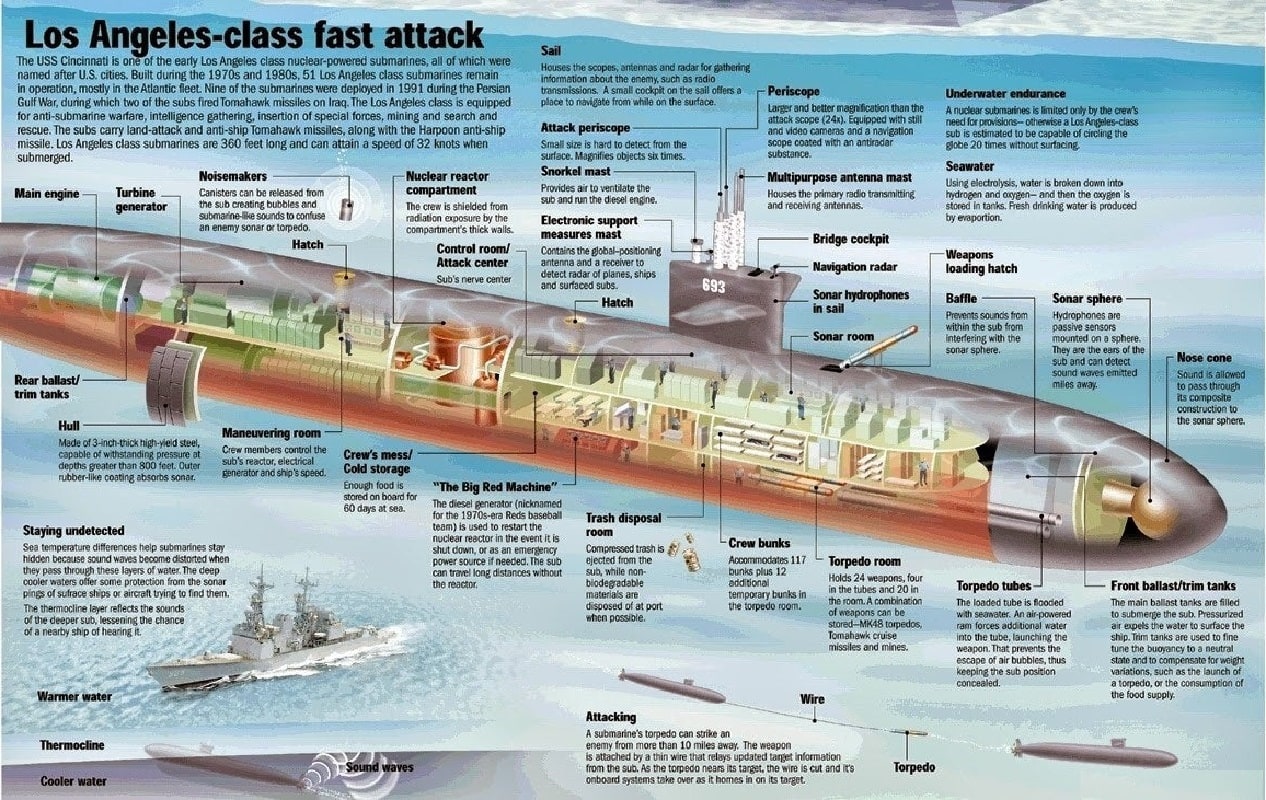
So the replacement sub should be seaworthy by then. Each replacement device could cost more than $4 billion, compared with $2 billion in Ohio.
Battle Of Submarines: World's Biggest Navy, Why China Could Be Ill Prepared For A Deep Sea Encounter With The Us
The U.S. Navy is exploring two options. The first option is a variant of the Virginia-class nuclear-powered attack submarine. The second option is a dedicated SSBN with a new hull or based on an overhaul of the current Ohio class.
In 2007, the US Navy began a cost containment study in partnership with Electric Boat and Newport News Shipbuilding.
In December 2008, the U.S. Navy awarded Electric Boat a $592 million contract to design a replacement missile bay for the Ohio class. Newport News is expected to receive about 4 percent of the project. In April 2009, US Secretary of Defense Robert M. Gates stated that the US Navy is expected to start such a program in 2010.
The new vessel is scheduled to complete the design phase in 2014. If the new hull design is to be used, the program should start in 2016 to meet the 2029 deadline.
Nuclear Armed Columbia Class Submarine Is Pentagon's Top Acquisition Priority. To Be Delivered In 2028
Columbia-class submarines were officially designated by Secretary of the Navy Ray Mabus on December 14, 2016, with lead submarine USS Columbia (SSBN-826).
2020, Navy officials
Us attack submarine classes, united states submarine classes, us submarine classes chart, british submarine classes, ww2 submarine classes, uk submarine classes, submarine classes us navy, american submarine classes, us submarine classes in service, current us submarine classes, us ww2 submarine classes, submarine classes

0 Comments