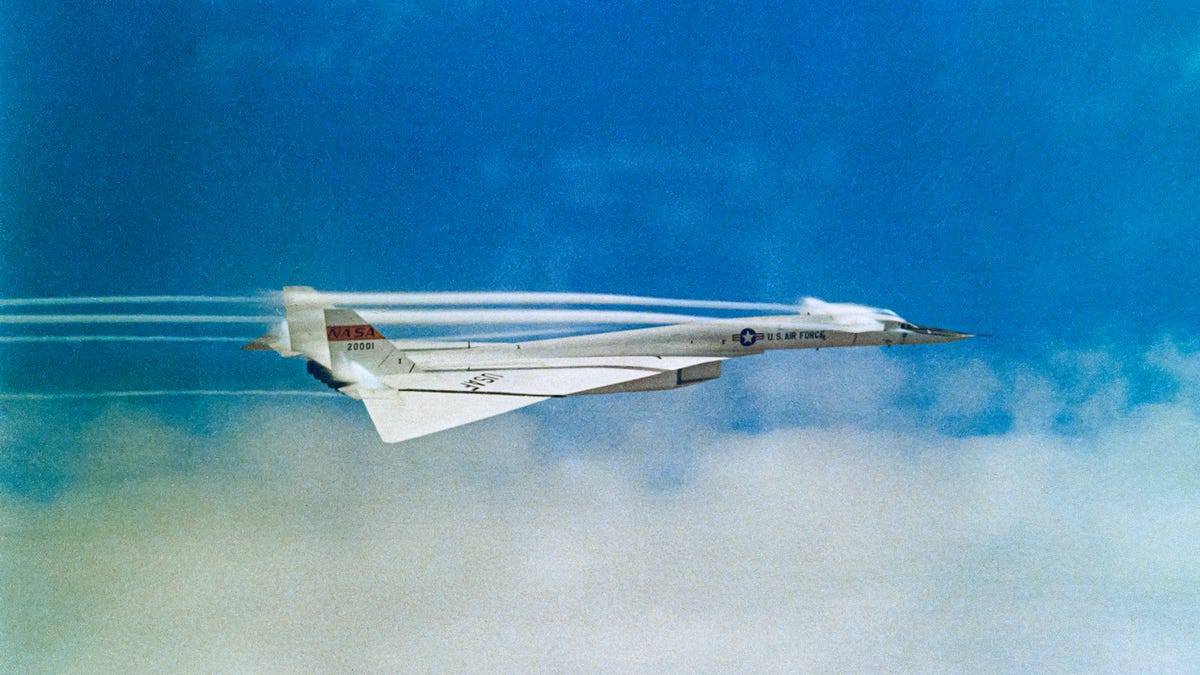
Xb 70 Crash - The North American XB-70 Valkyrie is a prototype version of the nuclear-armed B-70 strategic bomber for the US Air Force's supersonic tactical bombers. Designed by North American Airlines (NAA) in the late 1950s, the six Valkyrie vehicles could sail thousands of miles in Mach 3+ while flying at an altitude of 70,000 feet (21,000 m).
At this speed, the B-70 was expected to resist interceptors, the only effective weapon against bombers at the time. The bombers fly out of range for a short period of time at a specific radar station before the commander deploys the fighter into a suitable position for an interception. Its high speed made the aircraft difficult to see on radar screens, and its high capacity and high speed were unmatched by any modern Soviet interceptor or fighter.
Xb 70 Crash

With the introduction of the first Soviet surface-to-air missiles in the late 1950s, the B-70 was overshadowed. In response, the United States Air Force (USAF) began operating missions at low altitudes, where the field of view of rocket radar is determined by surface area. In this low-level attack role, the B-70 performs slightly better than the B-52. Other alternative missions have been proposed but are limited in scope. With the advent of intercontinental ballistic missiles (ICBMs) in the late 1950s, manned bombers became obsolete.
North American Xb 70 Valkyrie > National Museum Of The United States Air Force™ > Display
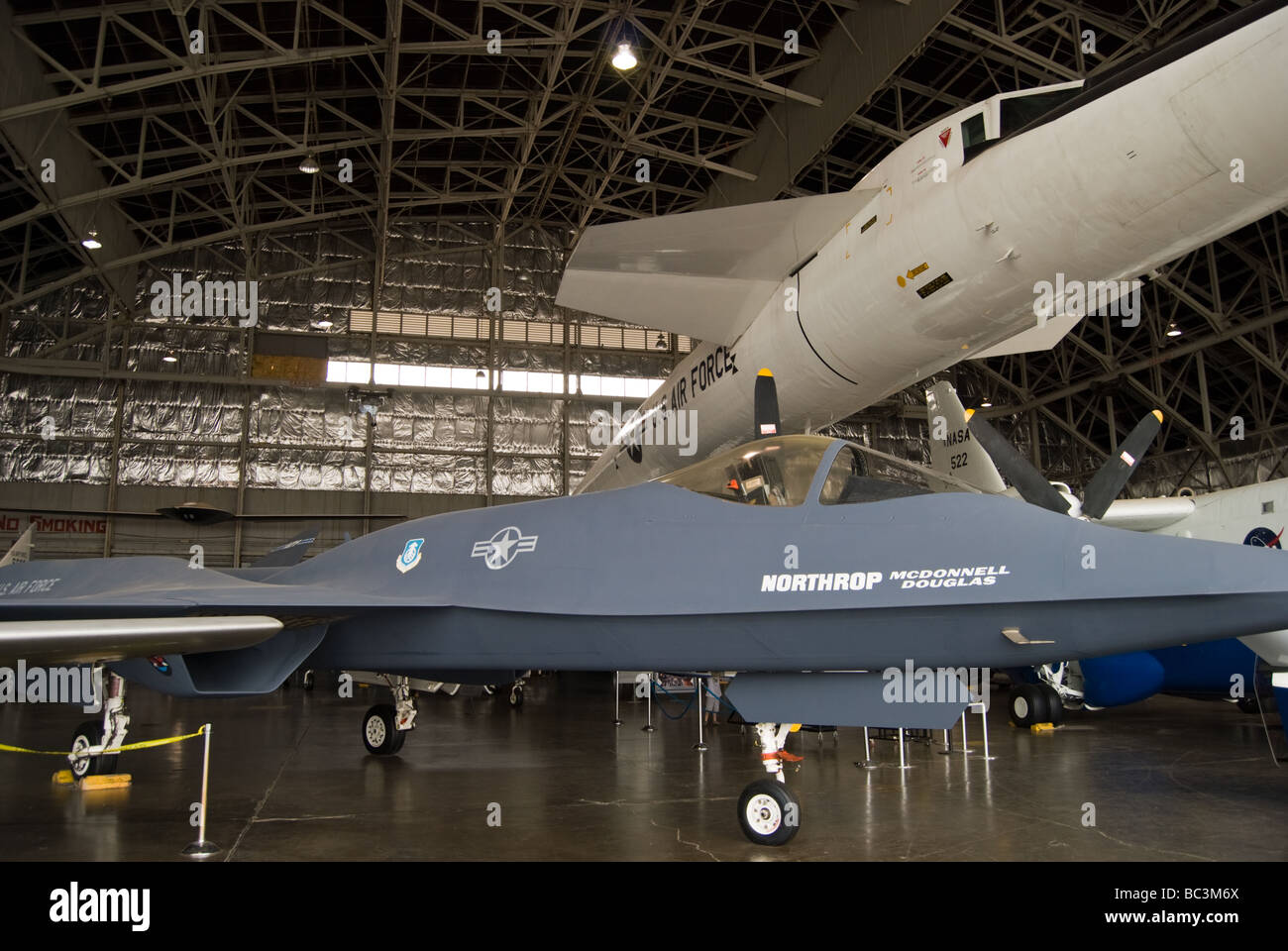
USAF abandoned the fight for production and the B-70 program was canceled in 1961. Developmt has turned into a research program studying the long-term effects of high-speed flight. Thus, two prototype aircraft designated XB-70A were built. The aircraft was used in supersonic test flights from 1964-69. A 1966 model flew at close range and crashed after colliding with a small aircraft. The rest of the Valkyrie bomber is inside the National Museum of the U.S. Air Force near Dayton, Ohio.
In the Boeing MX-2145 bomber project, Boeing was working with the RAND Corporation in January 1954 to determine and develop what type of bomber would be needed to deliver the various modern nuclear weapons that exist. Nuclear weapons at that time weighed several tons, and large bombers were needed to transport enough fuel to fly from the Americas to the Soviet Union. They also concluded after the bombing that supersonic speeds were required for the aircraft to avoid a catastrophic explosion.
The aviation industry has been studying this problem for some time. From the mid-1940s there was interest in using nuclear-powered aircraft as bombers.
In a typical jet engine, thrust is provided by using jet fuel to heat the air and accelerate it out of the engine. In a nuclear power plant, heat is supplied by a reactor that runs for months, not hours. Most designs also carry less jet fuel for use during high-powered portions of flight, such as takeoff and high-speed lunges.
North American Xb 70 In Color: Campbell, John M.: 9780764305078: Books
Another possibility being explored at the time was the use of boron-rich "zip fuel" to improve aircraft fuel economy by about 40%.
The United States Air Force (USAF) has been closely monitoring these developments and, in 1955, Operation Geral No. 38 requirements were issued. . activist.
Both nuclear and convtional designs are considered. The nuclear-powered bomber is classified as a '125A weapon system' and continues concurrently as a '110A weapon system' version.
Boeing's design is almost identical except for significant differences in the single vertical stability and the two giraffes in the pods on the outer edge of the inner wing.
This Image Shows The Complexity Of The Xb 70 Valkyrie Mid 1960s Research Aircraft Cockpit Compared To That Of An Upgraded B 1 Bomber
USF Aeronautical Research and Development Command (ARDC) requirements for the WS-110A call for a petrochemical bomber with a cruising speed of Mach 0.9 and a "maximum possible" speed for 1,000 nautical miles (1,200 miles; 1,900 km). Termination and Destination Termination. Demand also appealed for a 50,000-pound (23,000 kg) load and a 4,000-mile (4,600 mi; 7,400 km) radius.
The Air Force made similar requirements for the WS-110L intercontinental reconnaissance system in 1955, but it was later scrapped in 1958 due to better options.
Boeing and North American Airlines submitted bids, and on November 8, 1955, a contract was awarded for the first phase of development.
Zip fuel is used in the rear incinerator, improving range by 10-15% over conventional fuel.
Video: This Is What An Xb 70 Valkyrie Bomber Crash Landing Looks Like
Both designs feature large wing-foil fuel tanks that, when fuel is exhausted, can take flight before reaching the target faster than sound. The tank also contains the outer portions of the wings that are launched to create smaller wings suitable for supersonic speed.
Both became trapezoidal wings after release, the best-known form of operation at the time. They also have cockpits fitted to keep the proportions as perfect as possible despite the visual impact.
Both designs weigh around 750,000 pounds (340,000 kg) and have heavy fuel loads. The Air Force evaluated the designs and in September 1956 deemed them too large and complex to operate.

USAF completed the first phase of development in October 1956 and instructed two contractors to conduct design studies.
Watch An Xb 70 Valkyrie Mach 3 Bomber Doing An Emergency Landing
While the original proposal is being reviewed, progress is being made rapidly on faster-than-sound flight. The narrow delta is shaping the preferred plans for supersonic flight, replacing previous designs such as the wing and rectangular design that were present in designs such as the Lockheed F-104 Starfighter and earlier WS-110 concepts. Genes capable of withstanding high temperatures are also being developed, enabling sustainable supersonic speeds.
Doing this made an interesting discovery that when upgrading a gin, especially at high speed, you can burn twice as much fuel at that speed as running. But the aircraft will fly 4 times faster. So the most fuel efficient boat speed per mile is max speed. This is unexpectedly exhausting and shows no meaning to the concept of the dotted line symbol. If an aircraft can reach Mach 3, it can perform tire missions at that speed. Questions remain as to whether such an idea is technically feasible, but in March 1957 gin development and wind tunnel testing worked well and was possible.
The WS-110 was redesigned to fly at Mach 3 for tire missions. Zip fuel is stored on the Gin rear burner for increased range.
Both North America and Boeing returned new designs with longer chassis and larger delta wings. Mainly the gin layout is different. Whereas the NAA design placed six gins in semicircular tubes under the rear body, the Boeing design used separate pod gins located separately on the pylons under the wings.
Xb 70 Valkyrie Crash Site
North America explored the available literature for additional benefits. This led them to a dubious report by two NACA tunnel experts who wrote a report in 1956 titled "Aircraft Configurations Developing High Lift-Drag Ratio at High Supersonic Speeds."
The idea, known today as compression lift, is to use a shock wave from the nose or other sharp point in the plane as a source of high-pressure air.
Careful positioning of the wings in relation to the shock allows the shock's high pressure to be captured at the bottom of the wings and create additional lift. To take full advantage of this effect, they redesigned the underside of the aircraft, featuring a large triangular utilization area in front of the eccentrics that better find the impact compared to the wing. Six individually placed genes were rearranged three times in each of the two individual tubes below the body.
North America improved on the basic concept by adding wingtips that fell at high speeds. This helps catch the shockwave under the wing between the tips of the falling wings. It also adds more vertical room to the aircraft to maintain directional stability at high speeds.
Last Flight Of The Valkyrie: A Closer Look At The Forgotten Mach 3 Xb 70 Superbomber
The NAA solution has the added benefit of reducing the surface area on the back of the wing where the panels are moved into a high speed position. This compensates for the natural rearward or "average lift point" shift of pressure as speed increases. Under normal conditions, this results in increased nose-down, which must be offset by moving control surfaces to increase traction. When the wing tip is lowered, the lift surface of the wing is reduced, causing it to move forward and reducing traction.
Overheating from friction in flight resolves faster than it sounds. While boating at Mach 3, the aircraft averages 450°F (230°C) with the leading edge reaching 630°F (330°C) and room gins up to 1,000°F (540°C). . The NAA proposed making the design a sandwich panel, with each panel consisting of two thin stainless steel strips made on opposite sides of a bee-shaped foil core. excess titanium
Xb-70, xb 70 valkyrie crash video, xb 70 crash video, xb 70, xb 70 valkyrie 1 72, xb 70 crash site, north american xb-70 valkyrie, xb 70 model, xb-70 valkyrie crash, 1 48 xb 70, xb 70 valkyrie model kit, xb-70 valkyrie model


0 Comments